
Ysé—Pour ce qui nous attend de mieux
Posted by admin on August 26, 2026
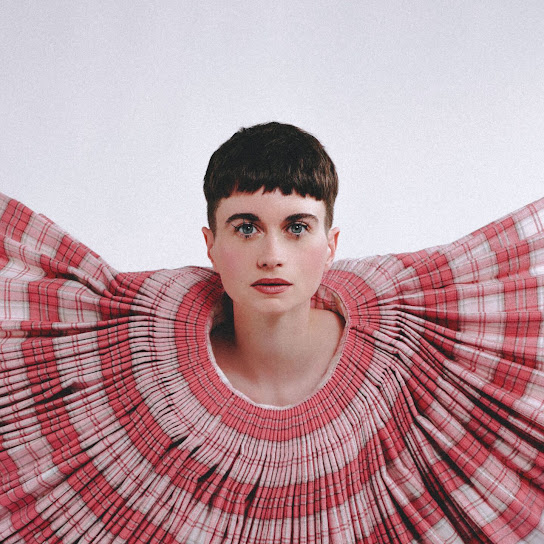
I've long had a passion for artists singing in their native language, but it's not often that I find albums that really speak to me. Many years ago, I bought the first two Vanessa Paradis albums, and I think this was where I first succumbed to listening to music in a foreign language. I'd always had a soft spot for French spoken word, but I became fascinated by the way I could connect with music without necessarily understanding every word.
I actually knew those albums so well that I could sing along to the entirety of both, and apart from the odd word, I was totally oblivious to what was being sung. But it didn't matter. It was about how the music made you feel. I did the same with a Danish artist called Sanne Salomonsen and her self-titled album.
The album opens with "Tour du monde", and I knew within seconds that this was going to be something special. It opens very simply, with a delicate piano and a simply beautiful voice, before the drums kick in and give the track some momentum.
The next track, "À quoi ça sert d’aimer", has a similar feel. It starts slowly, but again it's the drums that come in and gradually pick up the momentum. There are some really lovely vocal harmonies towards the end of the track that add a little more brightness.
Again opening with simple vocals, "Tu ne me manques plus" adds a subtle keyboard accompaniment that gives the track an almost ethereal feel. As mentioned earlier, my French is limited, but my ears did pick up the phrase "comme d'habitude". This took me on a little musical knowledge detour. "Comme d'habitude" was a big hit for Claude François, which might not immediately ring any bells. However, a certain Paul Anka heard the song and bought the rights, creating alternative English lyrics that would eventually become a huge hit for Frank Sinatra with "My Way". The lyrics are completely different from the French version, with the title translating roughly as "as usual".
It's easy to be smitten with a track, and "À ceux qu'on aime" is another example. It starts with vocals and simple accompaniment and doesn't veer too far from the formula established by the earlier tracks, but there's something about it that gives it that little hidden X factor. I'm sure that's partly down to the words, but I think a lot of it comes from the delivery. Just past the halfway mark, there's a break where questions are being asked, "Pourquoi...?", "Why...?" There's something in the delivery that is clear, fresh and quite beautiful. There's also a hint of vocoder, which adds a new texture and ensures there are still new things for the ear to discover.
Instead of piano, the primary counterpoint to the vocals in "Elles" is guitar. It's almost formulaic in its construction, starting stripped back and simple before gradually building up the musical textures and filling out the song with some wonderful sounds.
There's a live feel to "Je te cherche partout", which starts with ambient sounds of nature and water. It's driven by guitar, but when the vocals come in, the production gives the impression of being performed live, with those ambient sounds becoming part of the environment in which the song is being sung. The vocals also have a different feel to them. The title translates as "I'm looking for you everywhere", but rather than sounding sad or lost, there's a brightness to the delivery. Towards the end of the song, you can almost hear her smiling.
"Il neige sur la mer" has a similar sound, but it doesn't quite have the same live feel. I think the electronic keyboard counters the vocals and grounds them a little, although not to the detriment of the track.
There's something wonderfully delicate about the vocals in "Coquillage". I could translate the song and gain some insight that way, but I much prefer to simply feel the lyrics. The first half of the track follows the timing of a waltz, but in the latter half, the vocals almost step into double time, with a much more rapid delivery. I can't say my curiosity wasn't piqued when I discovered that the title translates as "shell" or "seashell", but regardless, this is a wonderful track. It's also the shortest, coming in at just under two minutes.
The beginning of "Les choses simples" is very much spoken word, almost like one side of a telephone conversation. The vocals are then sung, but with an electronic filter that, rather than making them ethereal, gives them an almost computerised finish. They feel almost like the sung response to the spoken words. It's quite different from the other tracks and gives the song an almost theatrical feel.
Closing out the album, "Pour ce qui nous attend de mieux", starts with a beautiful piano flourish. When the lyrics come in, they have a wonderful metre and are delivered with a real intimacy. The song continues to build, taking on that theatrical quality once again, almost like the closing of a chapter. The operatic vocals provide a wonderful final flourish, sealing what has been a beautiful journey.
I think disregarding music simply because you don't understand the lyrics can be somewhat short-sighted. After all, people have been going to operas sung in languages such as Italian and German for centuries. Sometimes it's not about understanding exactly what is being said. It's about how the music makes you feel.
I've loved listening to this album, and I love that it's somehow reawakened my appreciation for music that isn't sung in English. I'm sure this won't be the last wonderful foreign language discovery to appear here and hopefully not the last release featured by Ysé. Vraiment merveilleux.
Similar Artists:Comme un Homme Libre - Marta Del Grandi - The Boy Lacks Patience - Jana Mila